
A leading online flowers & gifts platform built around fast same-day delivery and moment-driven gifting experiences.
Summary
In short
A 9-country gifting platform, rewired around moments instead of products. Joined as the first product designer and built the design function from scratch into a team of designers, a UX researcher, and a UX writer. Led a full product redesign and rebrand across web and app, replacing a transactional grid with a moment-driven experience built around occasion, recipient, and gift type. Mapped the end-to-end journey from sender to recipient, ran cross-functional workshops to align category, ops, and call-centre on the user's promise gaps, and shipped the rework into 9 markets across the Gulf, UK, Jordan, and Egypt. Built the company's first unified design system and embedded research-driven iteration so decisions stopped being opinion-based.

The Challenge
A premium brand trapped in a transactional shell
Floward's platforms had grown outdated. The visual design didn't reflect the company's ambition to position itself as a premium gifting brand. More importantly, the entire experience was built like a typical e-commerce shop, product grids, transactional labels, utility-first navigation. It worked, but it didn't connect with why people actually came to Floward.
The company was going through a brand evolution, shifting toward a more premium, moment-driven identity. The digital platforms needed to catch up, not just visually, but structurally.
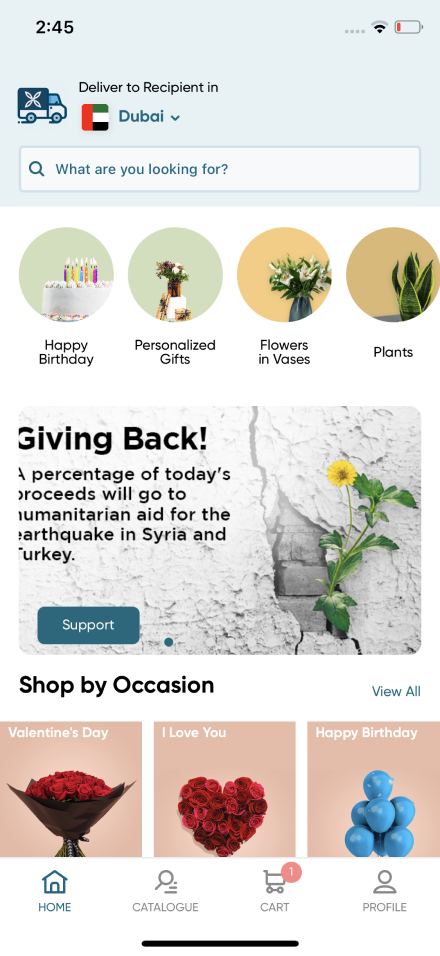
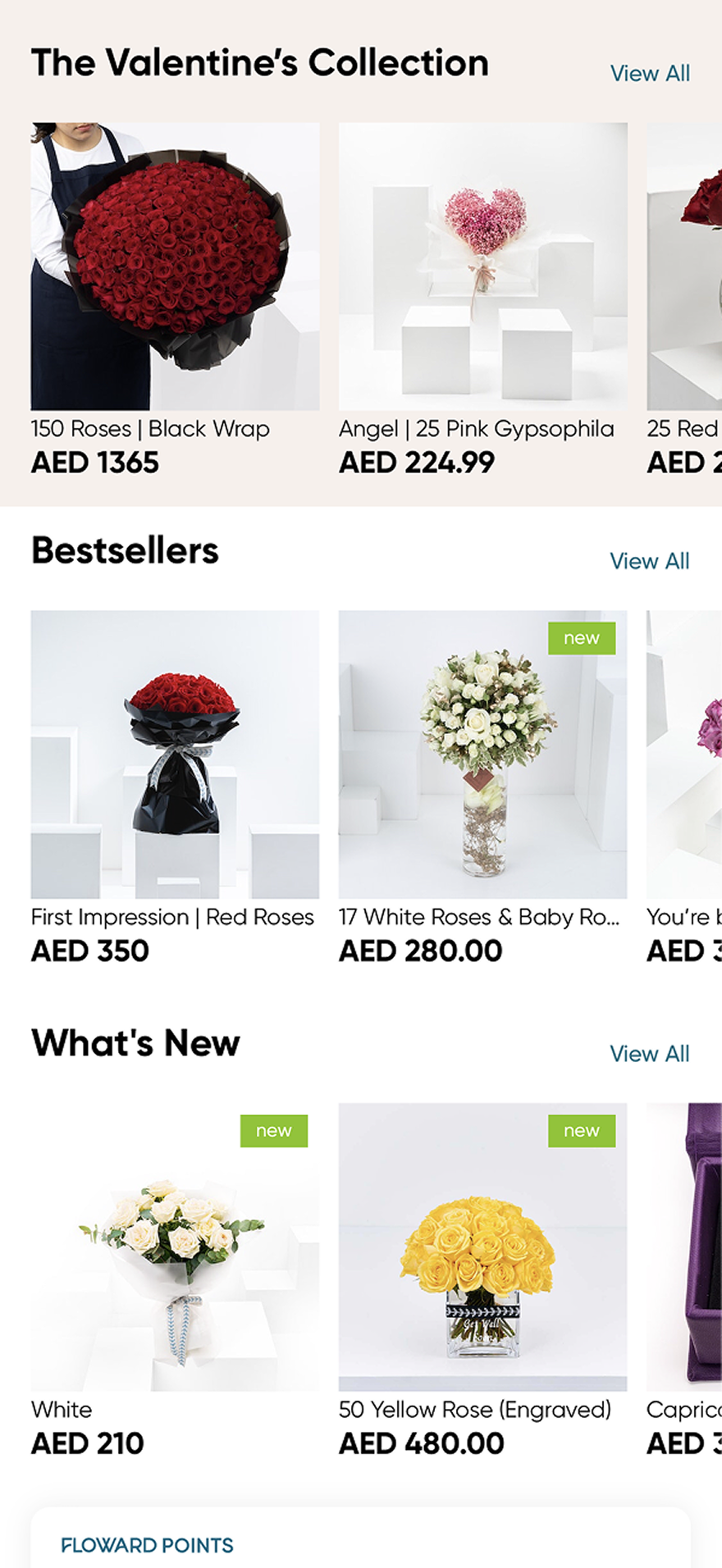
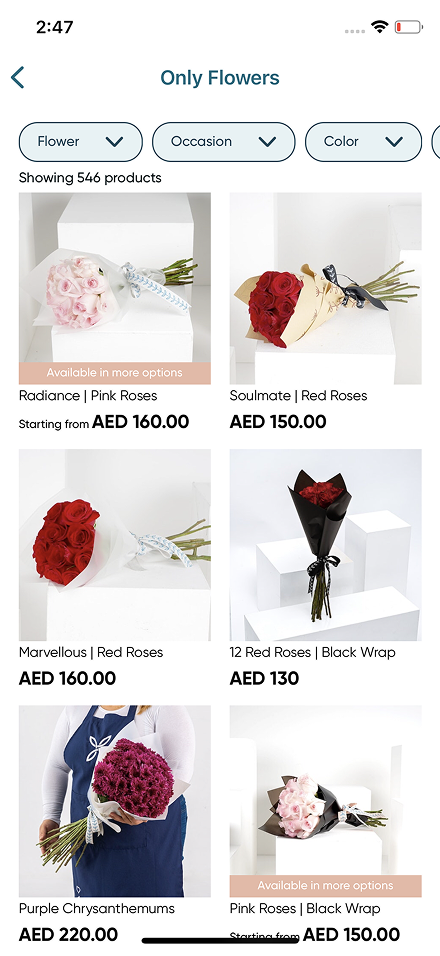
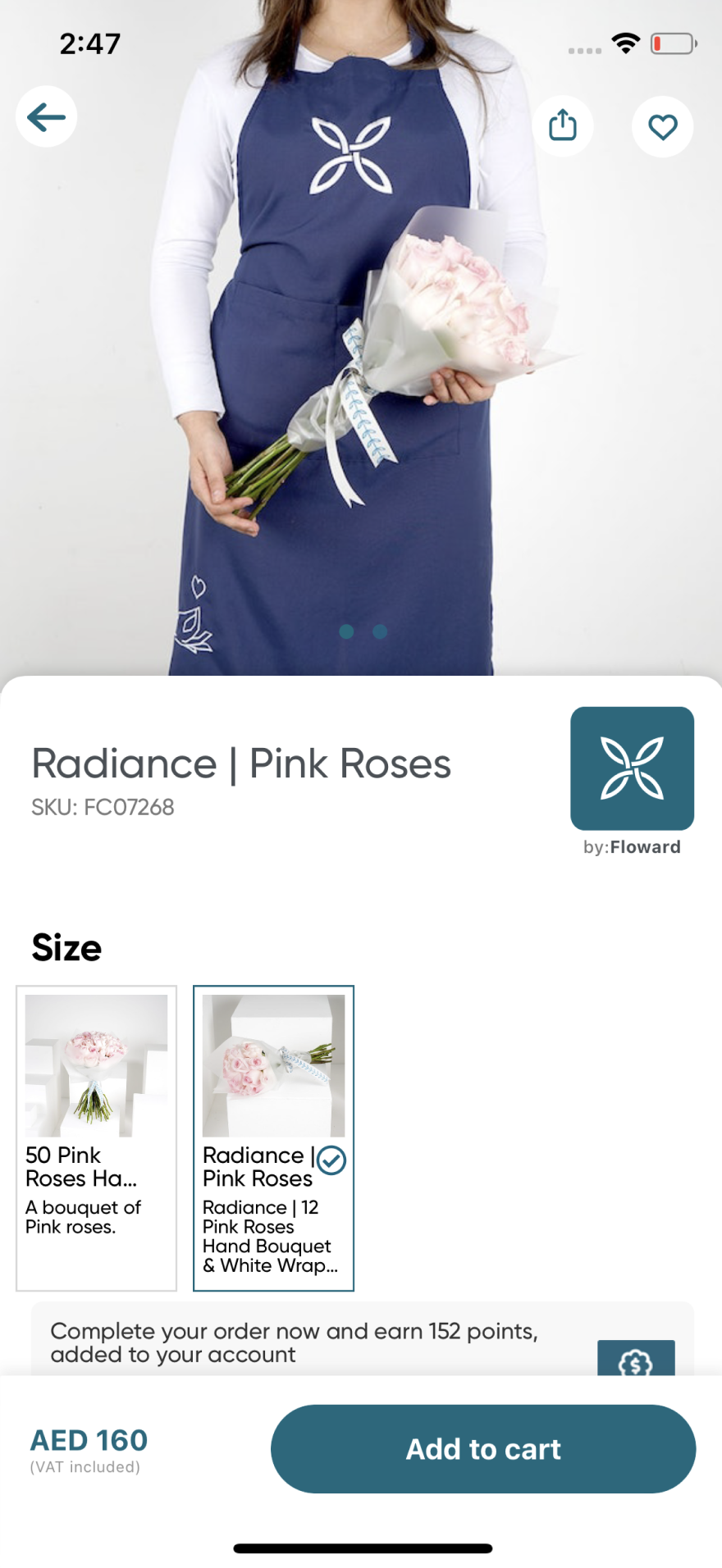
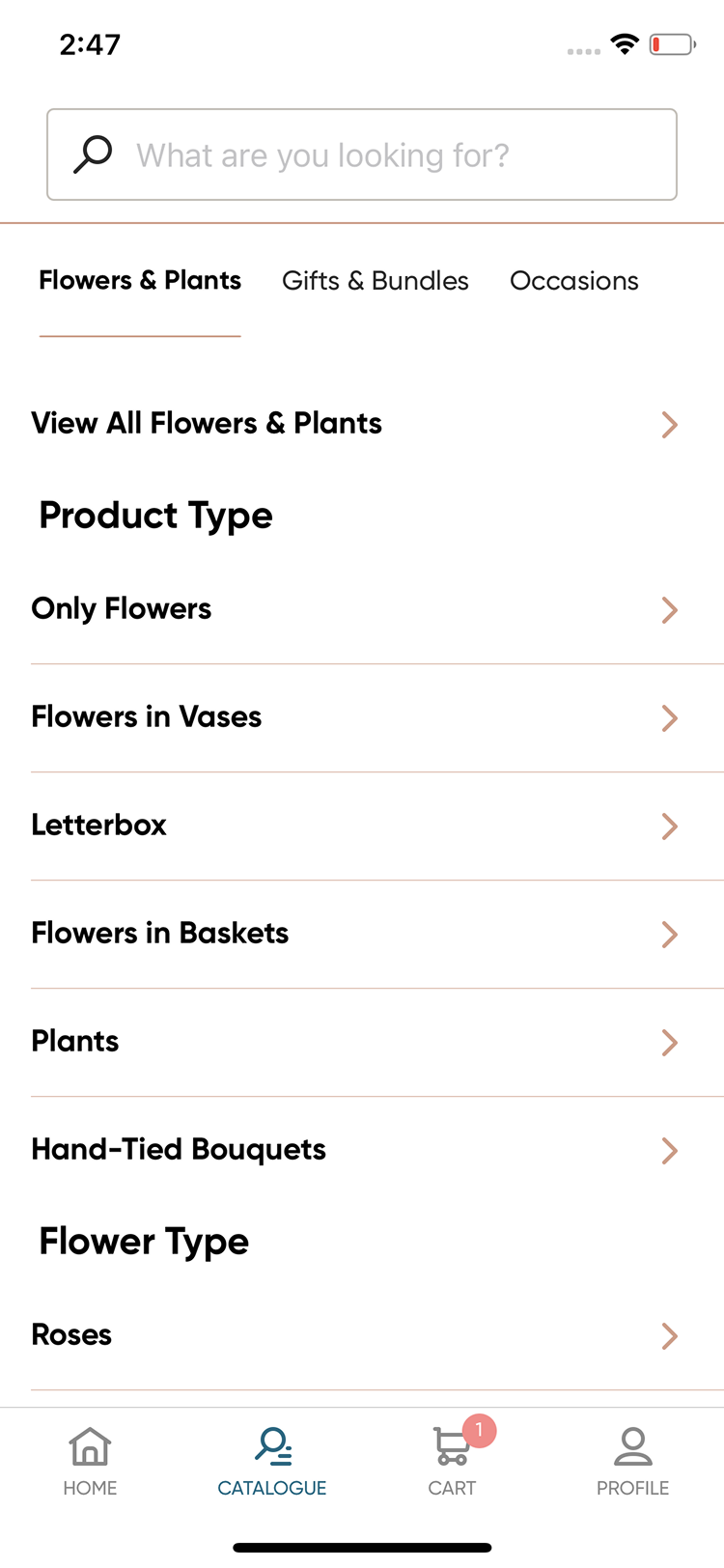
Before, the old Floward app. A dense product grid that read like a typical e-commerce shop, with utility-first navigation and transactional copy.
Mapping the Full Journey
Promises vs. expectations
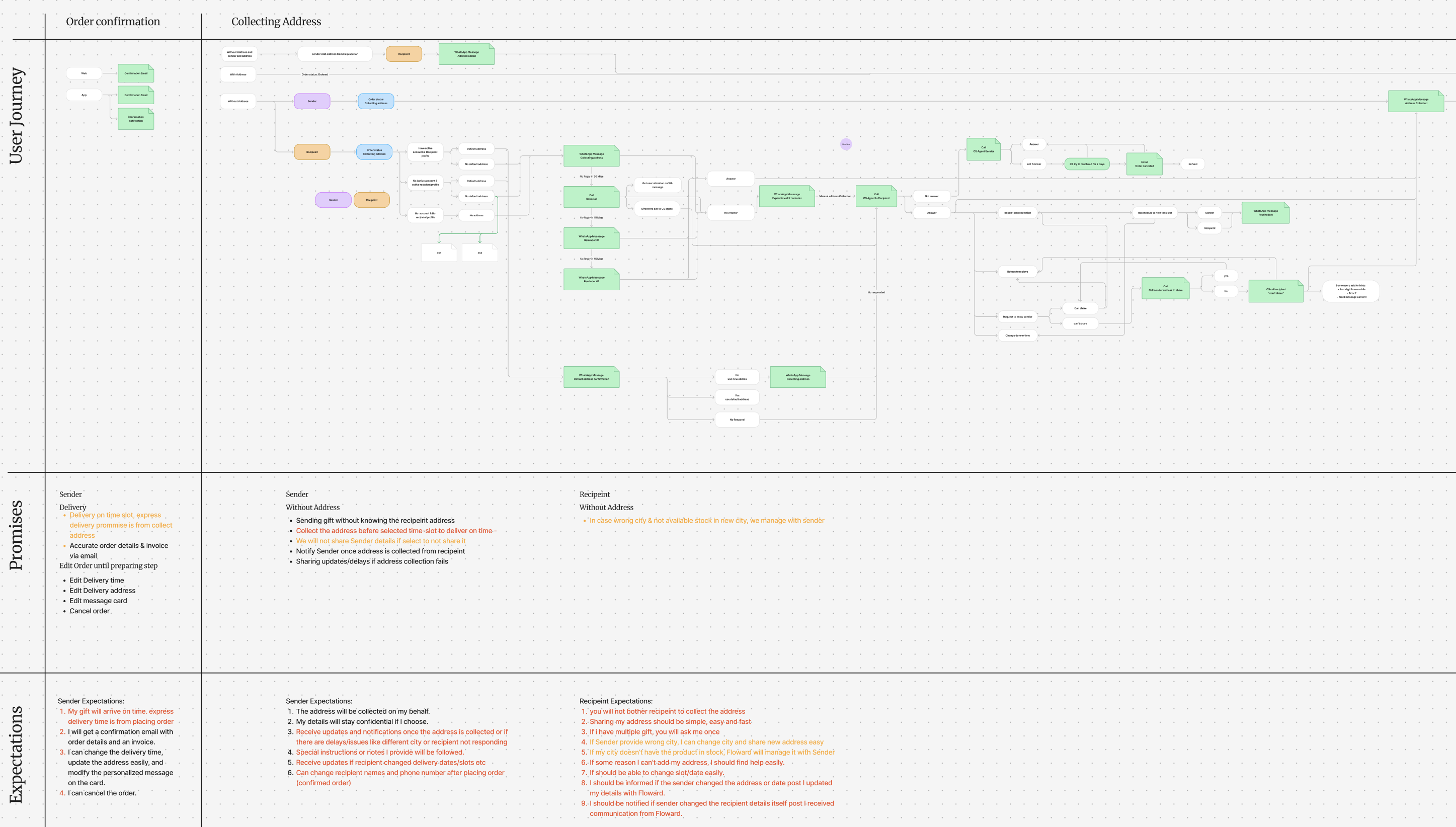
Before jumping into solutions, we needed to understand where the experience was actually breaking. We mapped every user journey across the pre-order and post-order experience — from the sender's first visit through to the recipient receiving the gift — and ran a gap analysis between what Floward was promising and what users actually expected.
How we did it: We ran cross-functional workshops with the category, merchandising, operations, and call centre teams to document Floward's promises at every touchpoint. Then we layered in user expectations gathered through surveys, user interviews, and quantitative data analysis.
The result was a clear map of gaps — places where Floward's promise and the user's expectation didn't match. These gaps became the backlog of projects and features that drove the redesign.
This gap analysis didn't just inform the brand redesign — it generated a prioritized backlog of features and fixes across the entire product. It also reinforced the core insight that followed.
The Insight
"Floward is not a shop."
This was the opening line of my presentation to the entire C-level leadership team. It got a reaction, the room went noisy. I paused, waited, and then walked them through the reasoning.
Through user interviews, usability testing, data analysis, and competitor research, we uncovered a fundamental truth: people don't come to Floward to shop for themselves. They come with a moment.
"Will my wife like this?" · "My mom's birthday is coming up, what should I get her?" · "How do I say I'm sorry?" · "I want something elegant for a graduation gift."
They're not browsing. They're searching for moment confidence, the reassurance that the gift they choose will land the way they intend.
Experience
The Framework
Two sides of every gift
The Sender Side, arrives with a moment to mark or celebrate (love, apology, congratulations, missing someone, birthday, anniversary, graduation, new baby).
The Recipient Side, wants to receive something that feels thoughtful, elegant, and experiential, not just a product in a box.
Floward sits between these two sides. Our job was to design the bridge, the Floward Experience, connecting the sender's intent to the recipient's delight.
We distilled the ideal gift into three words: Thoughtful. Elegant. An experience.
What We Changed
1. Tone of Voice, From Transactional to Moment-Driven
Every label, heading, and piece of microcopy was rewritten to reflect the moment-driven positioning.
| Before (Transactional) | After (Moment-Driven) |
|---|---|
| Shop by Occasion | Say it with elegance Turn occasions into moments |
| Best Sellers | Our Customers Love this gifts |
| Customizable Basket | Craft your own thoughtful gift Arrangement |
| Shop by Category | Everything is Better with Flowers |
2. Homepage, From Product Grid to Inspirational Moments
The old homepage was a wall of products. Category title, product grid. Repeat.
We replaced it with editorial, inspirational content. Large cinematic banners showing real moments, a birthday celebration, a graduation, a surprise delivery. The photography focused on the recipient's reaction, not the product in isolation.
The oversized banners also elevated the platform's premium feel, aligning with the brand's repositioning.
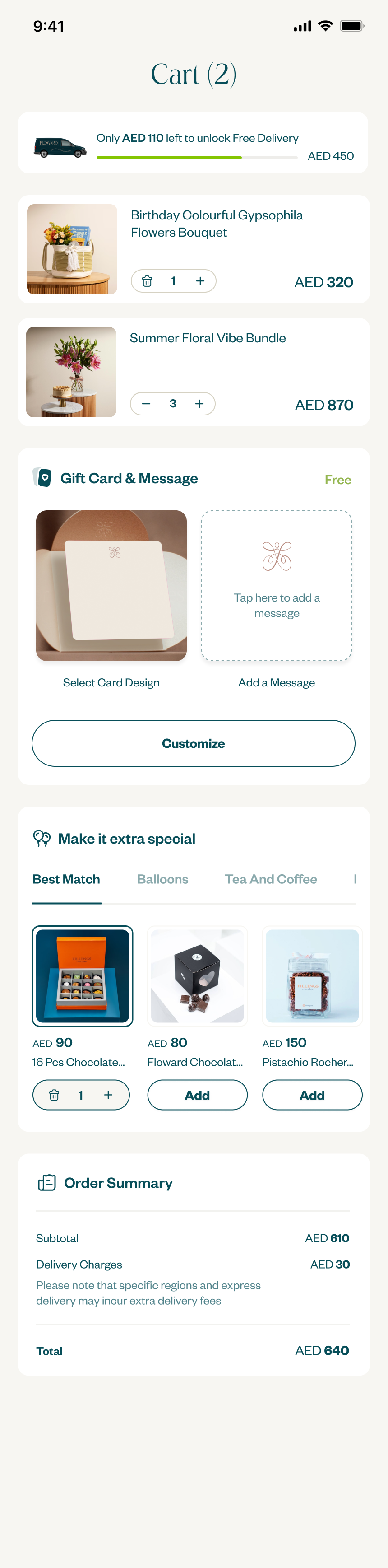
The redesigned homepage leads with large editorial banners and moment-driven storytelling. The grid steps back so inspiration can lead.
3. Cultural Localization
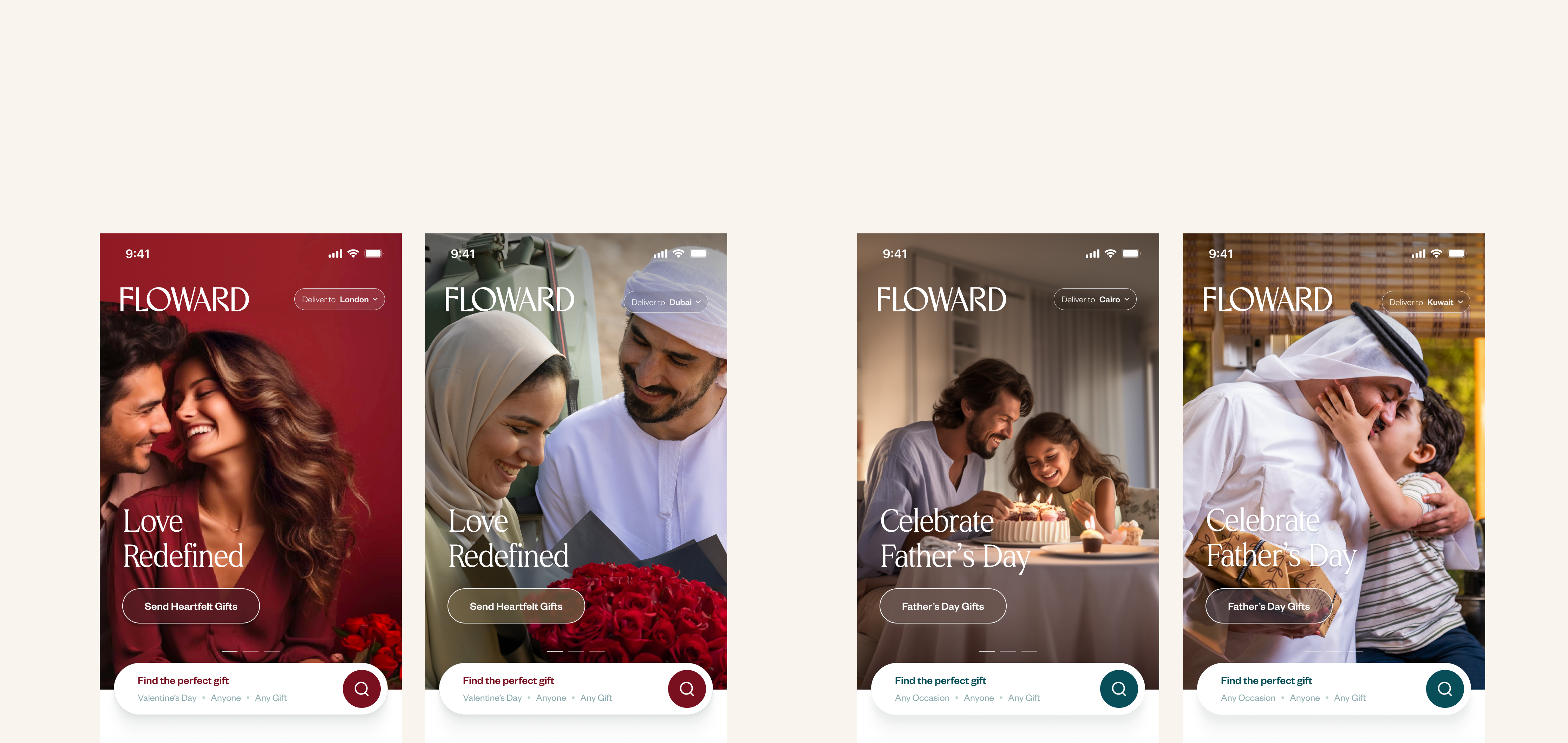
Our users span the Gulf countries, UK, Jordan, and Egypt. We localized the photography, banners, and celebrations.
A banner for London looks different from Dubai. Cairo's visual language is different from Kuwait's. Local celebrations, national days, cultural holidays, regional occasions, were woven into the experience.
4. Gift Finder, Bringing the Offline Experience Online
We visited multiple flower and gift shops in person to observe how staff guide customers. Every in-store interaction followed a three-question pattern:
What's the occasion?
Who is it for?
What kind of gift do you have in mind?
We built this into a Gift Finder, a prominent, guided three-step flow on the platform that mirrors the in-store experience.
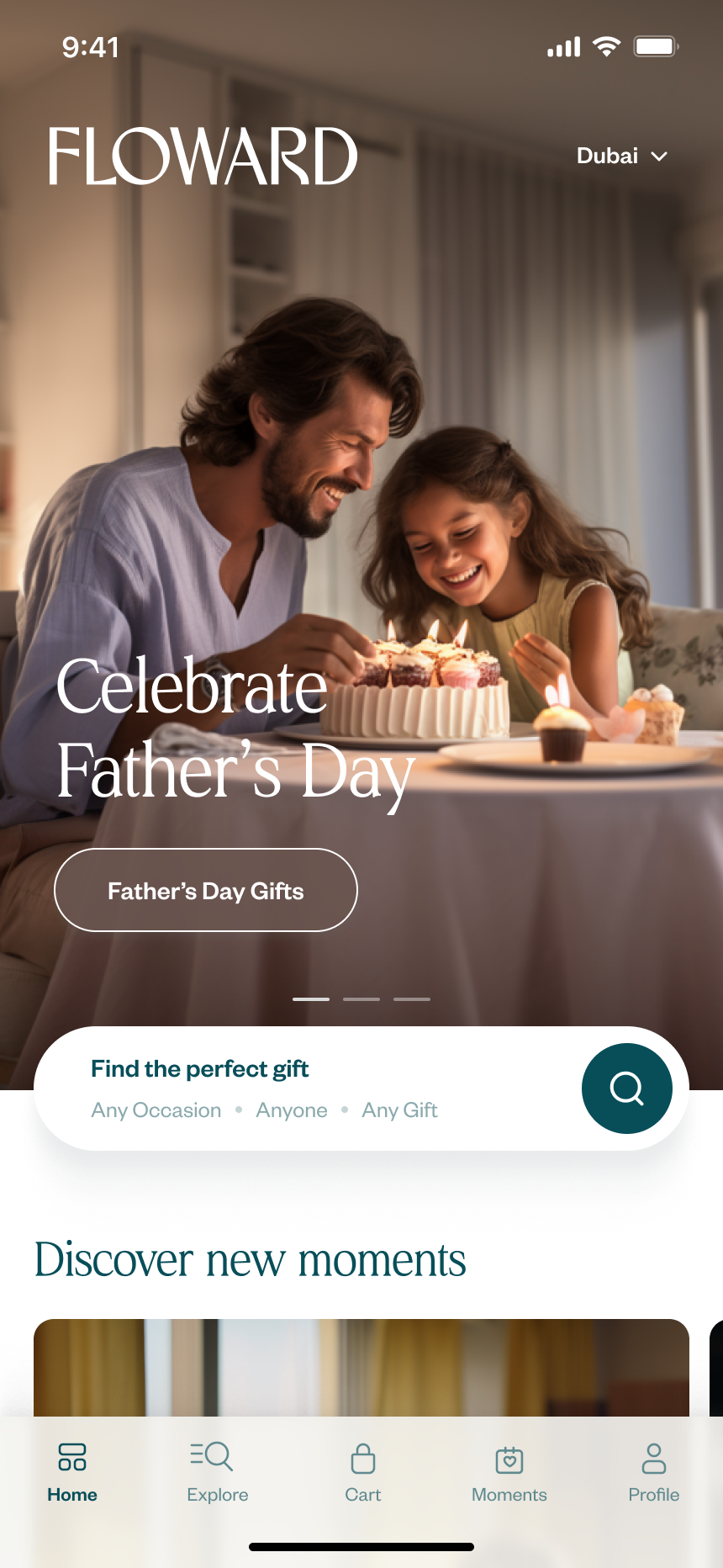
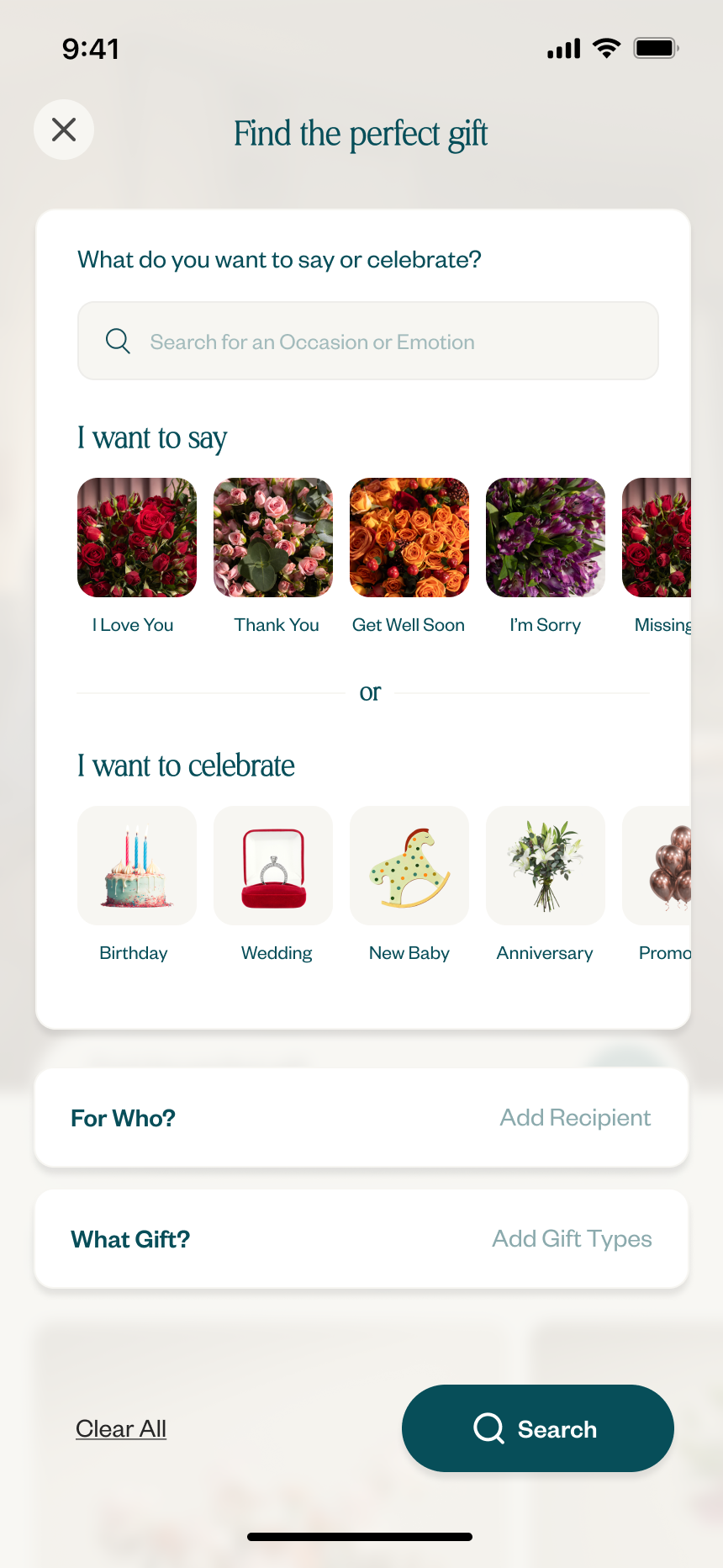
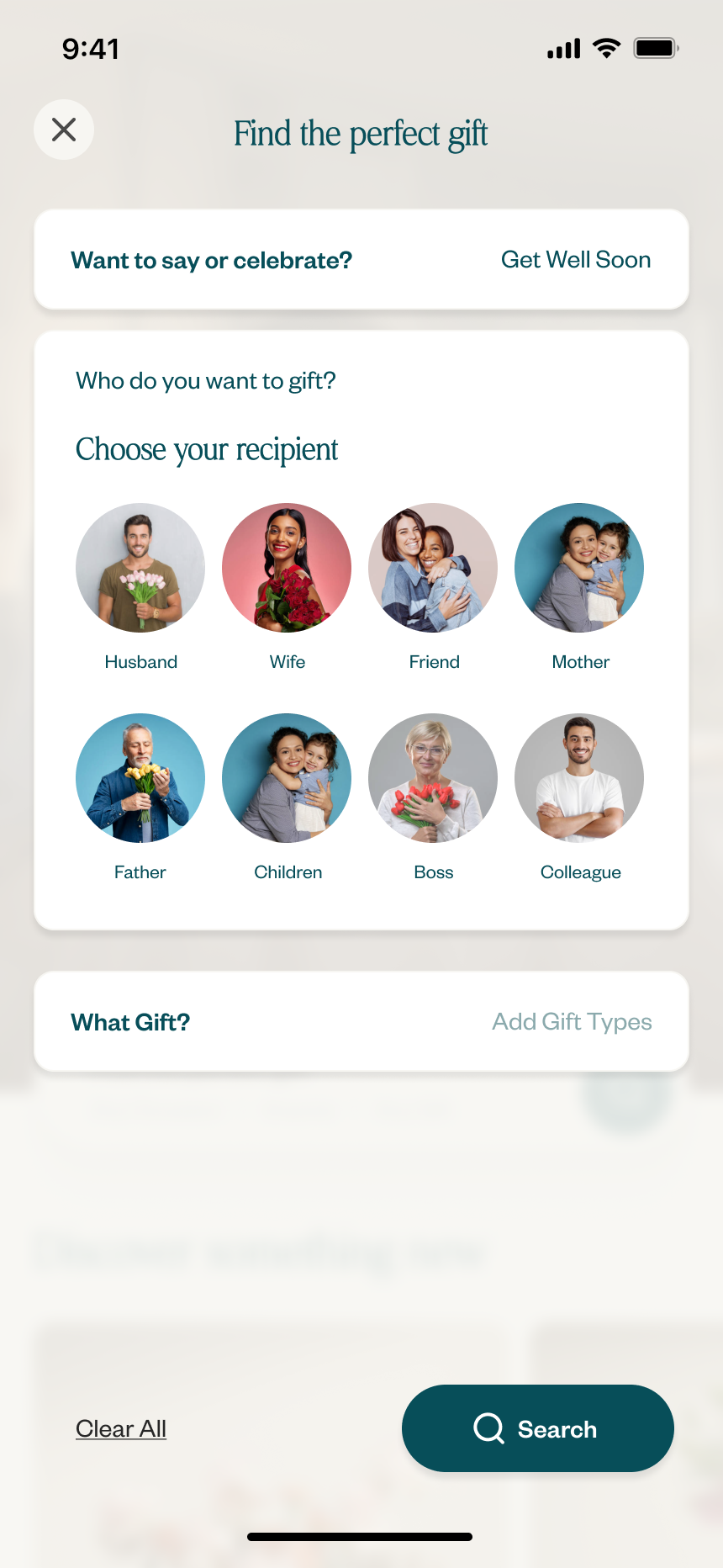
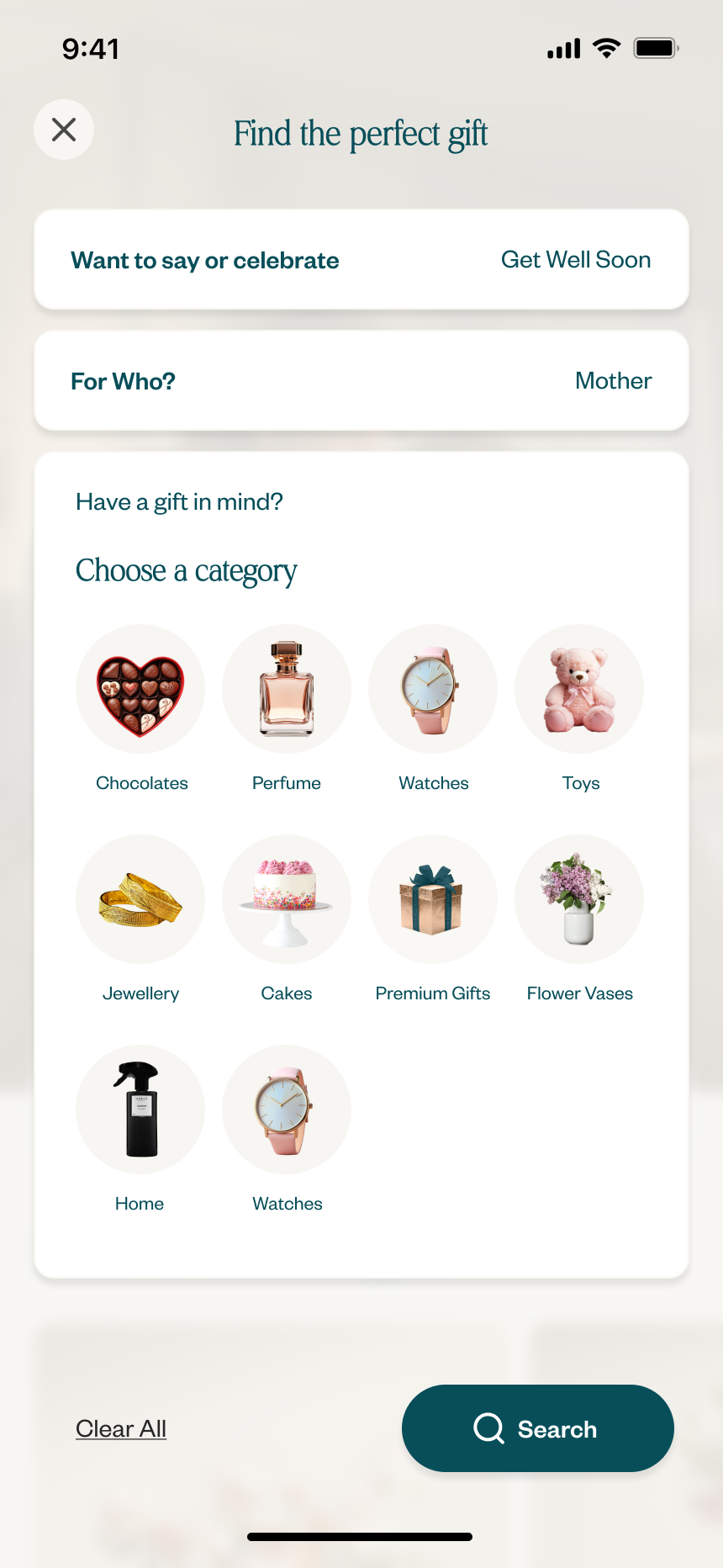
Gift Finder, a three-step flow that asks for the occasion, recipient, and gift type, then narrows the catalog to a curated shortlist. Helps senders who don't know exactly what to send.
5. Explore Tab, A New Way to Browse
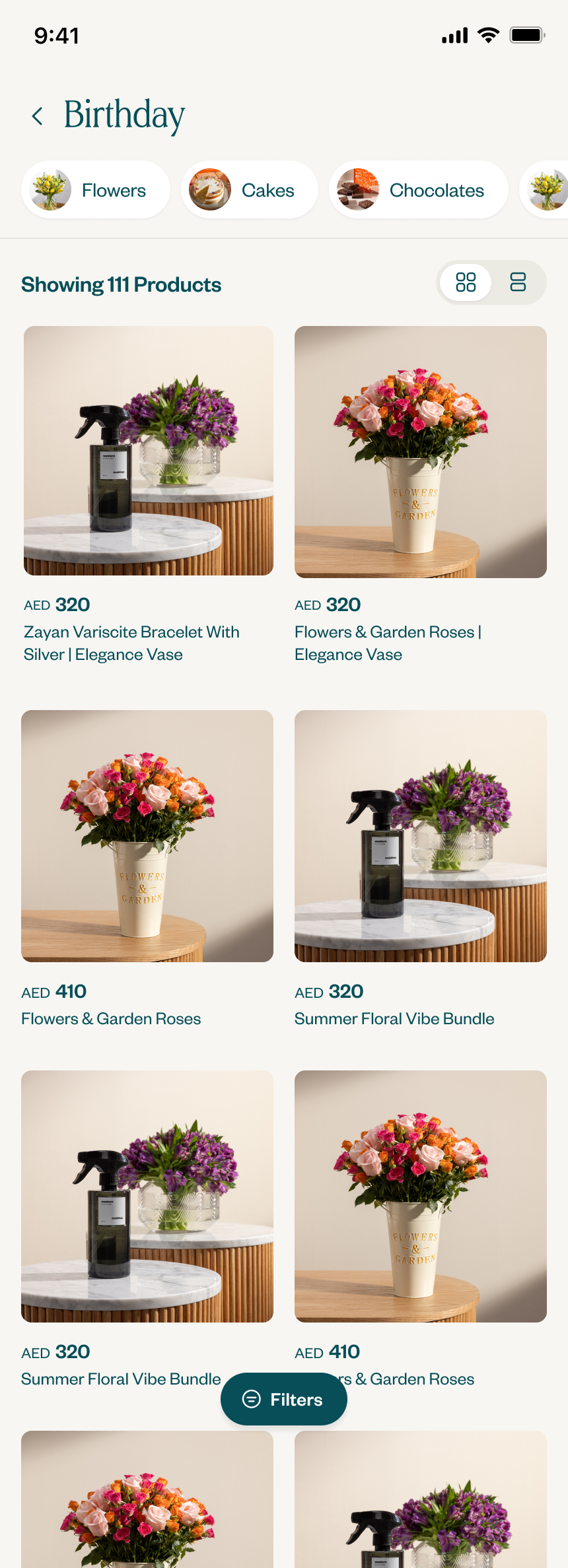
Data showed users weren't using search much. They wanted to browse and be inspired. We created a dedicated Explore tab that brought together search, full navigation, moments categories, the full catalog, and features like express delivery and subscriptions.
I worked with the category team and developers on the information architecture.
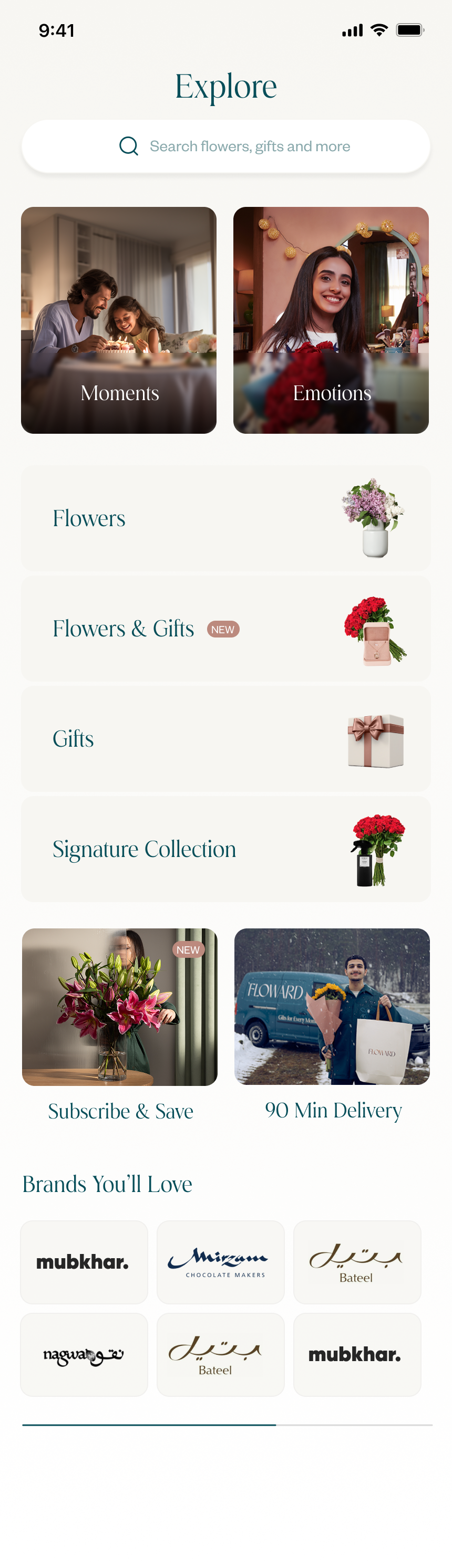
6. Thank the Sender, The Growth Loop
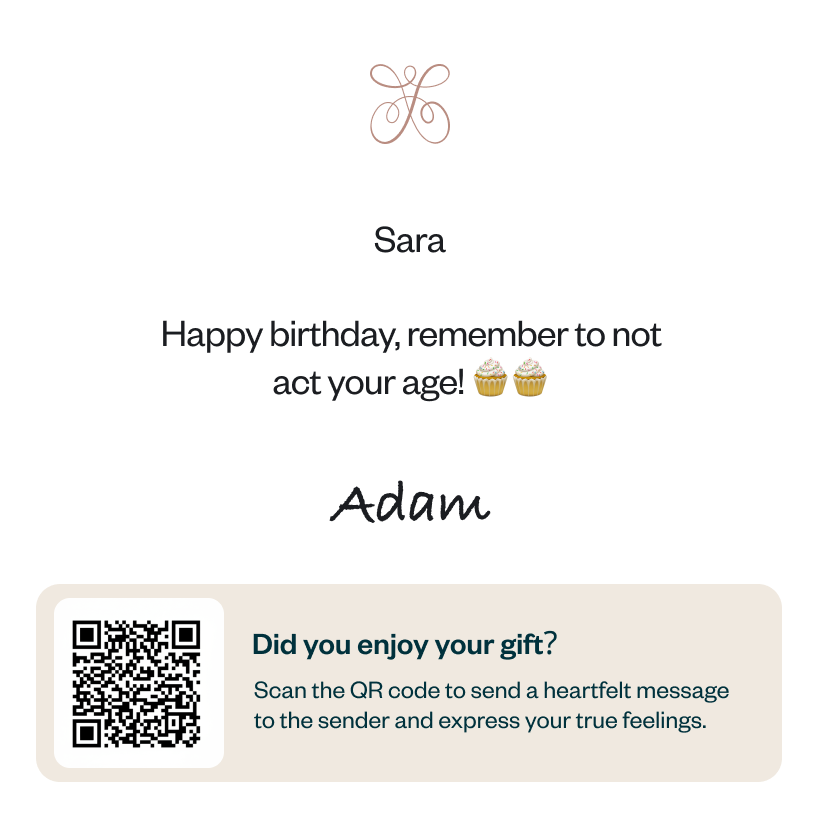
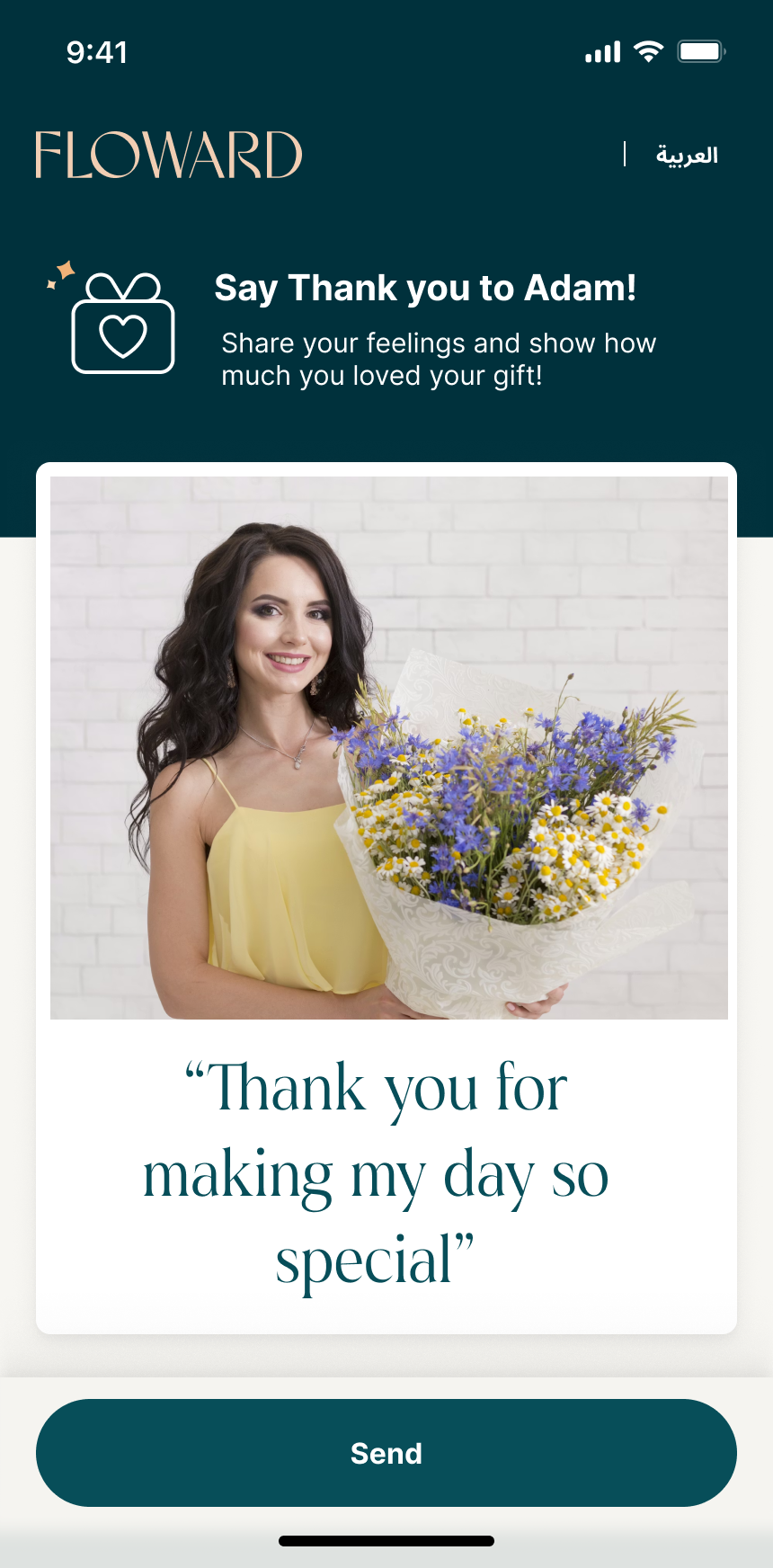
Recipients of gifts weren't coming back to Floward. We designed a feature called Thank the Sender:
A sender places an order and includes a card message
Floward prints a QR code on the physical gift card
The recipient scans the QR code
A web page opens where they can upload a photo and write a thank-you message
The recipient is now in the Floward ecosystem, and often becomes a sender themselves
Every gift delivered became an acquisition channel for a new potential customer.
The Process
How we got there
- User Interviews & Usability Testing, to uncover the moment framework
- Data Analysis, to identify behavioral patterns
- Competitor Review, to understand the landscape
- In-Person Gift Shop Research, visiting real shops to understand offline guided buying
- A/B Testing, every feature released to controlled audience first, scaled based on results
The Outcome
Measurable impact across the board
Final Designs
Explore the full design files
Open the live Figma files to walk through every screen, component, and flow across app and desktop.